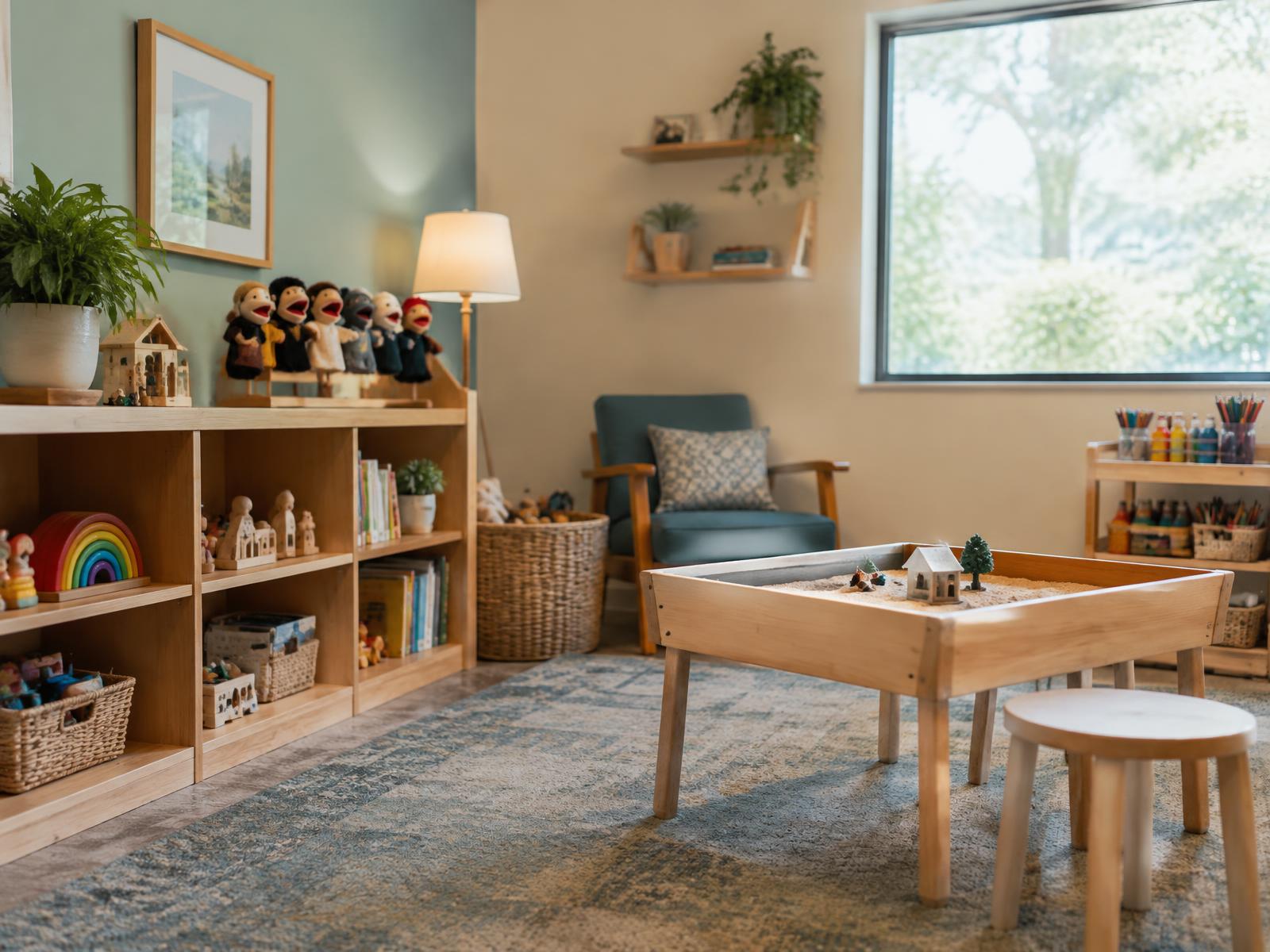
Play is how children think, feel and make sense of the world. In play therapy, play becomes the way a child communicates and heals.
What is Play Therapy?
Play is a child's natural language. Play therapy uses toys, art and imagination, rather than talking alone, to help children explore feelings and experiences. The child leads, free to play in their own way. The therapist follows with warmth and acceptance, staying alongside them and holding the space safely.
How it works?
Through a steady, trusting relationship, children play out what is hard to say. Over time, feelings could become clearer and easier to hold.
What a session looks like?
A weekly session of around 45 minutes, in the same room, at the same time. A child might become a lion, paint a storm, tuck a teddy into bed or bury treasure in the sand. Play lets them say, at a safe distance, what is too big to say directly.
Who it can help?
Children who are carrying big feelings or going through a difficult time, such as family change or separation, loss and bereavement, anxiety, or traumatic experiences. It can also support children with additional needs, and those who find it hard to settle, make friends or simply be themselves.
How long it takes?
Every child is different. Some need a term; others benefit from longer. We review progress together regularly, and when the time feels right, we plan the ending with care, so your child can say goodbye well.
 Wonder Play Therapy